
Kenya’s business landscape is shifting faster than most organizations can adjust. Markets are volatile, operational costs are rising, customers expect more value and better experiences, and the competition is no longer just local — it is regional, digital, and agile.
For many SME CEOs, the pressure is real. They are pulled between stabilizing the present and preparing for a future that seems to change every quarter. The hard truth is this: 2026 will not reward leaders who operate with yesterday’s mindset. It will favour CEOs who upgrade how they think, how they work, and how they lead.
This is the transition point. Leaders who fail to evolve will repeat the same struggles next year. Those who adapt will build companies that move with clarity, resilience, and strategic discipline.
1. The Leadership Gap Emerging in Kenyan SMEs
Across industries, similar gaps are becoming more visible — and they have less to do with ambition and more to do with execution.
1. Strategic fatigue – Too many CEOs are stuck in operations. They spend their days solving problems, managing crises, and handling tasks that should sit with their teams. Strategy becomes reactive instead of intentional.
2. Slow decision-making – When every decision funnels through the CEO, momentum stalls. Delegation is low, teams hesitate to take initiative, and managers lack the autonomy to drive execution.
3. Outdated management systems – Some SMEs still rely on memory, instinct, and verbal instructions. In today’s unpredictable market, this creates confusion, blind spots, and missed opportunities.
4. Weak internal culture – People no longer follow leaders simply because of hierarchy. Employees want clarity, purpose, and alignment. When culture fractures, productivity and accountability suffer.
Left unaddressed, these gaps become structural barriers to growth — and 2026 will intensify their consequences.
2. What 2026 Will Demand from CEOs
The coming year will reward leaders who build strong internal structures and penalize those who depend on hustle-driven leadership.
1. Operational intelligence – Forecasting, planning, analyzing, and pivoting will become core CEO responsibilities. Decisions must be data-led, not guesswork or habit.
2. People-centered leadership – High-performance teams require clarity, communication, and continuous development. Culture will be a competitive advantage, not a feel-good initiative.
3. Systems before energy – Growth can no longer rely on the CEO’s personal drive. Organizations need processes, governance frameworks, and accountability systems that create consistency.
4. Brand-aware leadership – A CEO’s reputation and visibility are strategic assets. Leaders must communicate consistently — internally and in the marketplace — to build trust and credibility.
5. Digital fluency – This is not about coding. It’s about understanding the tools, platforms, and data that influence productivity, customer behavior, and business performance. This is the emerging CEO profile: intentional, structured, fast, data-aware, and deeply aligned with modern business realities.
3. Where CEOs Must Upgrade Themselves
Transformation starts with the leader. As 2025 winds down, CEOs must evaluate how they operate and what needs to shift.
1) Redefine the CEO role – Move from firefighting to design. The CEO must set vision, architect systems, and empower capable managers to execute.
2) Build leadership depth – Growth requires shared leadership. Hire intentionally, develop managers, and distribute decision-making. High-growth companies rely on leadership teams, not heroic founders.
3) Adopt decision-making frameworks – Dashboards, monthly performance reviews, budgets, and KPIs create structure, predictability, and control — reducing operational chaos.
4) Strengthen communication – Teams perform best when direction is clear. Communication must be consistent, planned, and aligned with strategic goals.
5) Stress-test the business model – Assess whether your model can withstand shocks, scale sustainably, and remain profitable under new market conditions. These upgrades determine competitiveness. They are not optional.
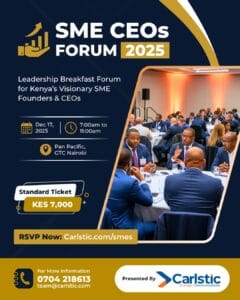
Join Us at the SME CEOs Forum 2025
If you are a founder or business leader looking to sharpen your direction, strengthen your internal systems, and scale confidently in 2026, the SME CEOs Forum 2025 is designed for you.
This private leadership circle brings together Kenyan CEOs for a focused, candid conversation on growth, leadership, structure, and the realities of building resilient companies today.
👉 Reserve your seat at www.carlstic.com/sme